analytics & modeling
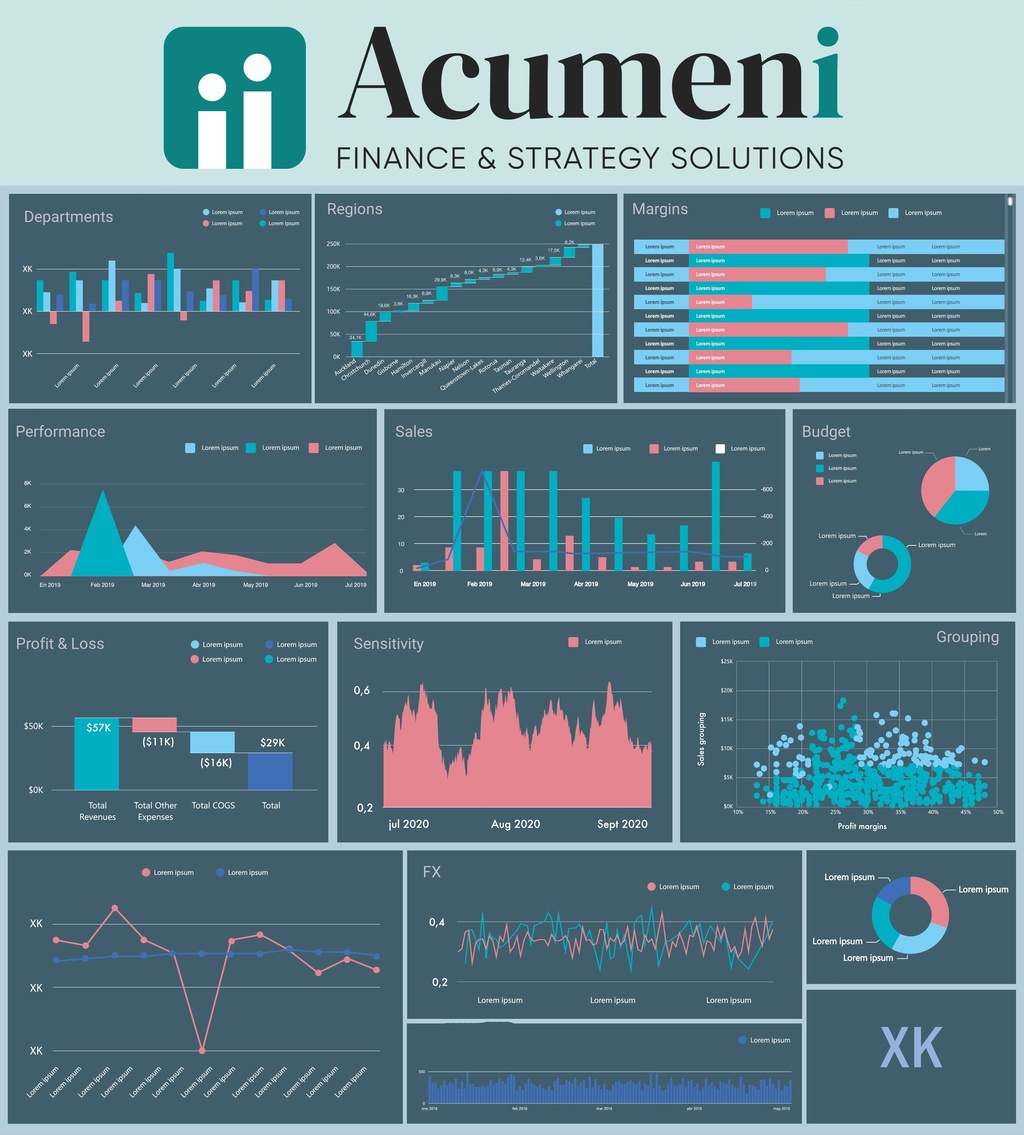
In an increasingly complex finance landscape, data-driven decision-making is essential for businesses to remain competitive and achieve sustainable growth. At Acumeni, our Analytics & Modeling service provides the tools businesses need to make informed finance decisions. We develop meticulous finance models that enable businesses to simulate various scenarios, assess risks, and plan for future growth with confidence and precision.
Who?
Our Analytics & Modeling service is designed for a broad range of businesses, particularly those that rely on precise finance forecasting and risk assessment. This service is highly beneficial for:
- Small and Mid-Sized Enterprises: These businesses need detailed finance modeling to evaluate growth opportunities, manage risks, and ensure efficient use of resources.
- Startups Seeking to Scale: Startups in high-growth phases need predictive models to simulate different market or operational scenarios, helping them secure investments and make strategy decisions.
- Large Corporations with Complex Finance Structures: Large businesses with multiple divisions or intricate finance portfolios require comprehensive models to consolidate data and make accurate projections.
- Businesses Entering New Markets or Launching New Products: When entering new markets or launching products, businesses need to assess market potential, finance feasibility, and risks involved, which is facilitated by finance modeling.
- Companies Preparing for Mergers & Acquisitions: Finance models help businesses simulate potential outcomes of mergers or acquisitions, analyze valuation, and assess the overall finance impact.
- Firms Seeking External Funding or Investment: Startups or mature businesses that are seeking funding from investors require detailed finance models to demonstrate potential returns and assess the feasibility of the venture.
Why?
In an ever-changing market environment, businesses must rely on more than intuition to make decisions. Data-backed finance models provide a foundation for well-informed decision-making. Here’s why finance modeling and analytics are essential:
- Informed Decision-Making: With comprehensive finance models, businesses can make data-driven decisions, reducing guesswork and improving accuracy.
- Risk Management: Simulating various scenarios—such as economic downturns, operations disruptions, or market changes—enables businesses to assess risks and develop contingency plans.
- Resource Optimization: Finance models allow companies to analyze how different allocation strategies impact performance, helping them optimize resources and investment for maximum efficiency.
- Future Planning: Businesses can plan for the future by creating growth models that project revenue, expenses, and profitability over time.
- Enhancing Investor Confidence: For businesses seeking investments, finance models offer clear, data-driven insights into growth potential, profitability, and risk management, increasing investor confidence.
- Avoid Costly Mistakes: By understanding the financial impact of decisions before they are made, businesses can avoid strategic missteps.
- Align with Business Goals: Finance models allow companies to align operational decisions with their long-term strategic goals, ensuring consistency in planning and execution.
- Monitor Performance Continuously: Finance models provide a framework for ongoing performance monitoring, allowing businesses to quickly spot deviations from the plan and make necessary adjustments.
- Maintain Stability in Volatile Markets: In uncertain times, proactive risk management ensures that businesses can withstand market fluctuations and maintain finance stability.
- Plan for Contingencies: Having a finance model in place allows businesses to create contingency plans, ensuring they are ready to respond to crises without derailing their operations.
- Plan for Future Growth: Whether expanding into new markets, launching products, or hiring talent, accurate finance forecasting ensures that businesses have the resources to support their growth.
- Optimize Resource Allocation: Finance models enable businesses to allocate resources more effectively, ensuring that investments are directed toward high-growth opportunities.
- Maximize Profitability: By understanding future profitability trends, businesses can optimize pricing, cost structures, and other variables to maximize their bottom line.
How?
Our Analytics & Modeling service covers several key components to help businesses develop customized finance models that address their unique needs. These include:
Scenario Simulation
Finance models enable businesses to simulate various operations and market scenarios. By adjusting key variables such as revenue growth rates, cost structures, or market conditions, businesses can understand the potential finance impact of different strategies. This allows decision-makers to:
- Test Assumptions: Finance models allow businesses to test critical assumptions about their growth prospects, potential market penetration, or cost-saving initiatives.
- Prepare for Best and Worst-Case Scenarios: Businesses can assess how they would perform under favorable conditions (best-case) and stress-test their finance health under challenging conditions (worst-case).
- Optimize Strategy: Based on the insights provided by the simulation, businesses can optimize their strategy to minimize risks and maximize returns.
Risk Assessment & Management
Our finance models help businesses identify potential risks and assess their finance impact. We focus on:
- Risk Identification: Our team works with clients to identify operations, finance, and market-related risks specific to their business.
- Probability and Impact Analysis: We help businesses assess the likelihood of various risks and quantify their potential impact on business operations and profitability.
- Mitigation Strategies: By understanding the risks, businesses can implement mitigation strategies to reduce or eliminate threats to their financial stability.
Growth and Profitability Forecasting
Our finance models provide projections of key finance metrics, such as revenue, expenses, and cash flow, enabling businesses to plan for growth. With growth and profitability forecasting, businesses can:
- Identify Growth Drivers: Businesses can analyze which variables drive growth, such as pricing strategies, market expansion, or product innovation.
- Set Realistic Targets: By understanding future performance trends, businesses can set achievable revenue and profitability targets.
- Improve Capital Planning: Finance models help businesses determine how much capital is required to meet their growth targets and optimize investment decisions.
Cash Flow Optimization
We develop cash flow models to help businesses manage liquidity and ensure they can meet their short-term and long-term financial obligations. Our cash flow modeling services include:
- Cash Flow Projections: Businesses receive detailed cash flow forecasts, showing projected inflows and outflows over a set period.
- Working Capital Analysis: We assess the efficiency of the company’s working capital management, identifying areas for improvement in accounts receivable, inventory management, and accounts payable.
- Liquidity Planning: Our models ensure that businesses have enough liquidity to manage daily operations and unforeseen expenses, helping them avoid cash shortages.
What?
Our Analytics & Modeling service delivers real, measurable outcomes for businesses. Some of the key benefits include:
- Accurate Forecasting and Planning: Our clients can project future finance performance with a high degree of confidence, allowing them to allocate resources more effectively and plan for upcoming challenges.
- Reduced Uncertainty in Decision-Making: Finance modeling provides a clear, quantitative framework for making critical business decisions, reducing the guesswork and uncertainty involved in strategic planning.
- Improved Risk Management: Businesses are better equipped to manage and mitigate finance risks, ensuring that they can weather adverse conditions and emerge stronger.
- Enhanced Operational Efficiency: By using finance models to identify inefficiencies, businesses can streamline operations and focus on areas that drive growth and profitability.
- Greater Access to Capital: Companies that present clear finance models to potential investors or lenders are more likely to secure funding on favorable terms, allowing for expansion and innovation.
- Increased Profitability: Through improved decision-making, risk management, and efficiency, businesses can achieve higher levels of profitability and ensure long-term financial health.